Medical Device Backup

We may earn a commission from links on this page, at no cost to you. As an Amazon Associate, we earn from qualifying purchases. Disclosure
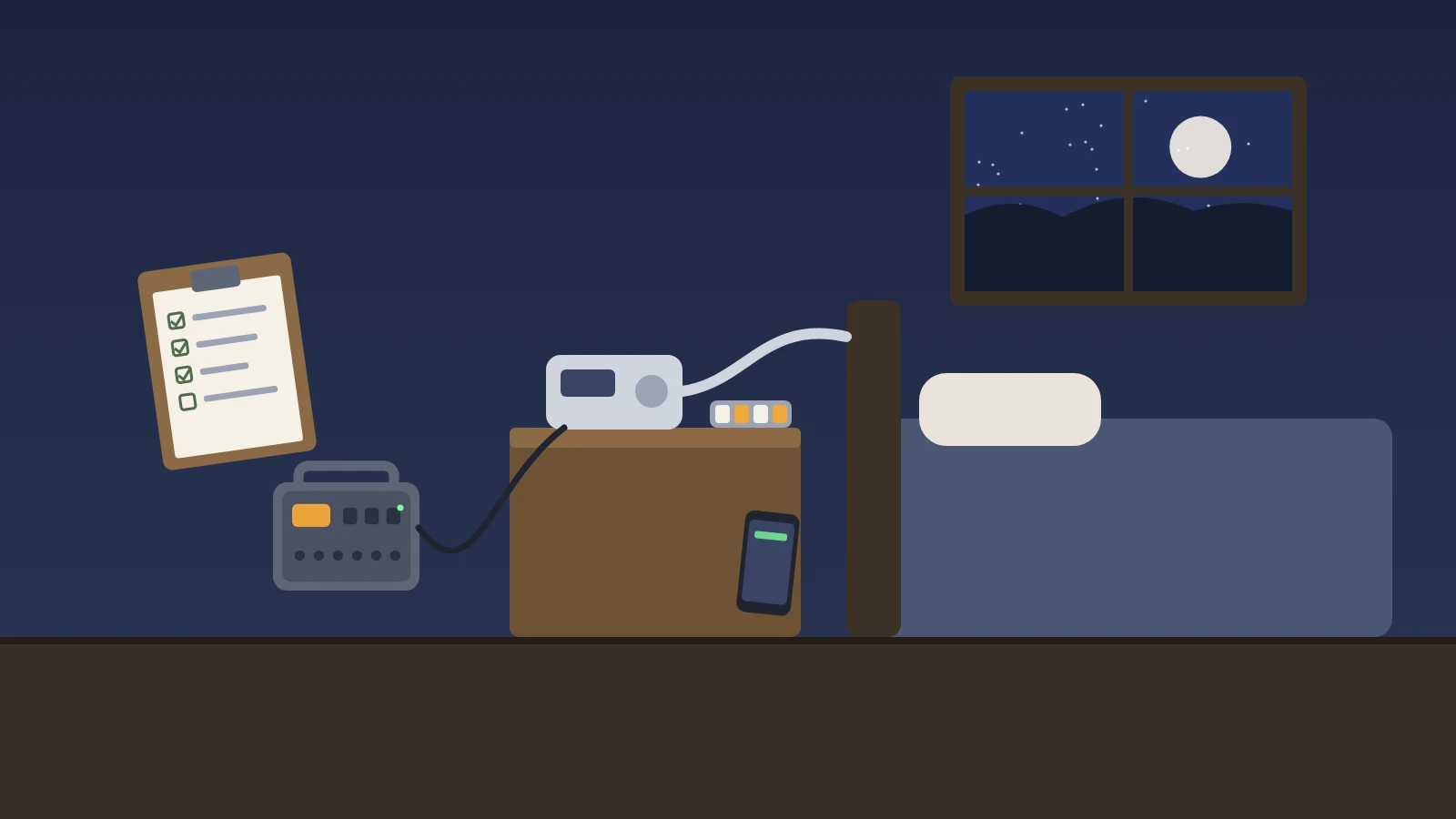
Illustration: a bedroom at night with a medical device and a pill organizer on the nightstand, a portable power station on the floor, and an outage plan checklist

Start with your provider. Ready.gov advises talking with your medical provider about an outage plan for power-dependent devices and refrigerated medicines (Ready.gov). This page is planning help, not medical advice.

Checklist

Medical device backup plan: find the device's watts in its manual (ResMed AirSense 11: 56.1 watts typical, 73.2 peak), multiply by hours used (56.1 watts for 8 hours is about 449 watt-hours a day), and size a battery with margin; then check the station maker's position on medical use, use the device maker's DC cable, ask your utility and local emergency management, have a fallback place with power, and start with your provider
Sources: ResMed AirSense 11 user guide, Jackery, and Ready.gov (power outages). Planning help, not medical advice.

Sources: the ResMed AirSense 11 user guide and Jackery. Our sizing guide walks through the math.

Full guides: CPAP backup power → · Oxygen concentrator backup → · Keeping insulin cool →

No hands-on testing of medical power setups.