Heads up: Some links on this page are affiliate links. If you buy through them, we may earn a commission at no extra cost to you. As an Amazon Associate, we earn from qualifying purchases. Full disclosure

A portable power station is a big battery with outlets: quiet, safe to use indoors, and enough to keep the essentials running through a typical outage. These guides help you pick the right size without overbuying.
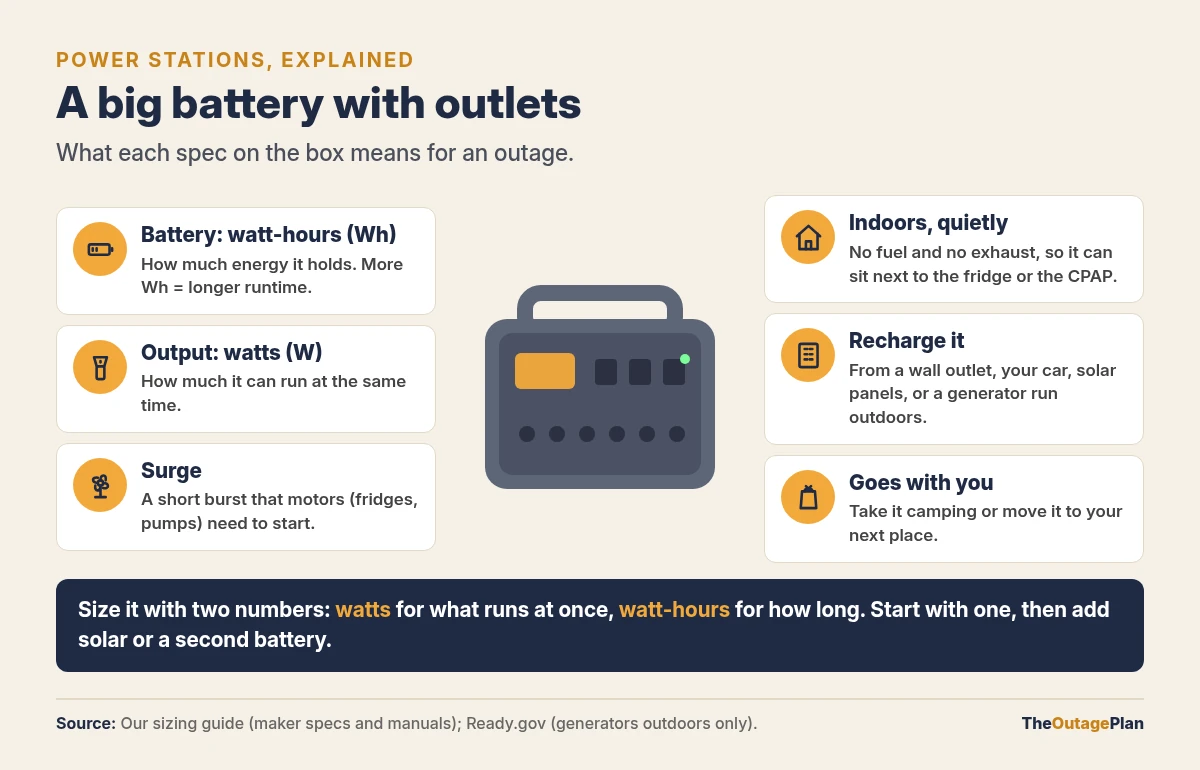
Why we start here: a power station costs far less upfront than a standby generator or a home battery install, needs no electrician, runs quietly with no fuel, and you can take it camping or move it to your next place. Start with one, then add solar panels or a second battery later. Portable vs. standby generator vs. home battery →
Start here
- How to size a power station for a power outage: watts vs. watt-hours, run-time math, and real specs.
Find your guide
Tap a topic to open it.
Choose and compare a station (8 guides)Specs, brands, and buying
- EcoFlow DELTA 3 Plus vs. BLUETTI AC180 vs. Jackery Explorer 1000 v2: a spec-by-spec comparison from manufacturer data
- EcoFlow vs. Jackery vs. BLUETTI for home backup: expansion, recharging, and weather limits
- Best power station for an apartment or small space
- Best solar generator kits for power outages (station + panel)
- Best big power stations for whole-home-style backup: 120/240 V and panel-ready
- Black Friday power station buying checklist
- Power station vs. gas generator for a home outage
- Portable power station vs. standby generator vs. home battery: cost, noise, install, and mobility, side by side
Fridge, freezer, and food (3 guides)Keep food cold and safe
Medical devices (3 guides)Talk to your provider first
- Backup power for a CPAP
- Can a power station run an oxygen concentrator?
- Keeping insulin cool in a power outage: FDA guidance and three coolers
Phones and Wi-Fi (3 guides)Stay reachable and online
Sump and well pumps (2 guides)Water in, water out
Heating and cooling (3 guides)Winter storms and heat waves
Storms, shutoffs, and solar (4 guides)Plan for multi-day outages
A note on how we compare
Our comparisons are based on manufacturers’ published specs and manuals. We haven’t done hands-on testing yet, and when a guide includes our own testing, it will say so at the top.
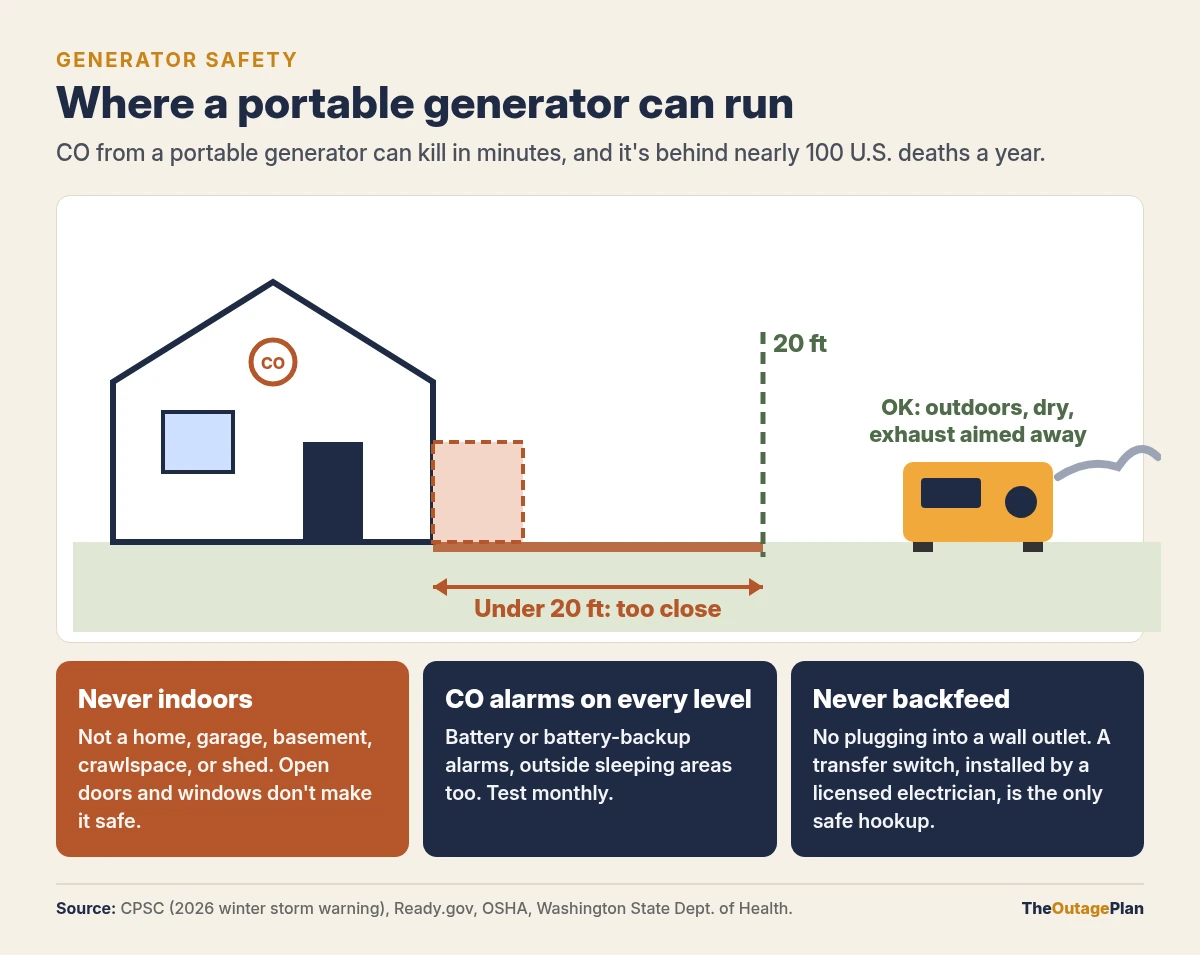
Generator safety: if you add a gas generator for recharging, run it outdoors only (Ready.gov):