
Heads up: Some links on this page are affiliate links. If you buy through them, we may earn a commission at no extra cost to you. As an Amazon Associate, we earn from qualifying purchases. Full disclosure
Bottom line: Use the American Red Cross list below as your baseline. It’s built for a family of four. Then add your own medications and a printed list of emergency numbers. Keep one kit at home and one in the car (Red Cross).
The Red Cross family-of-four list
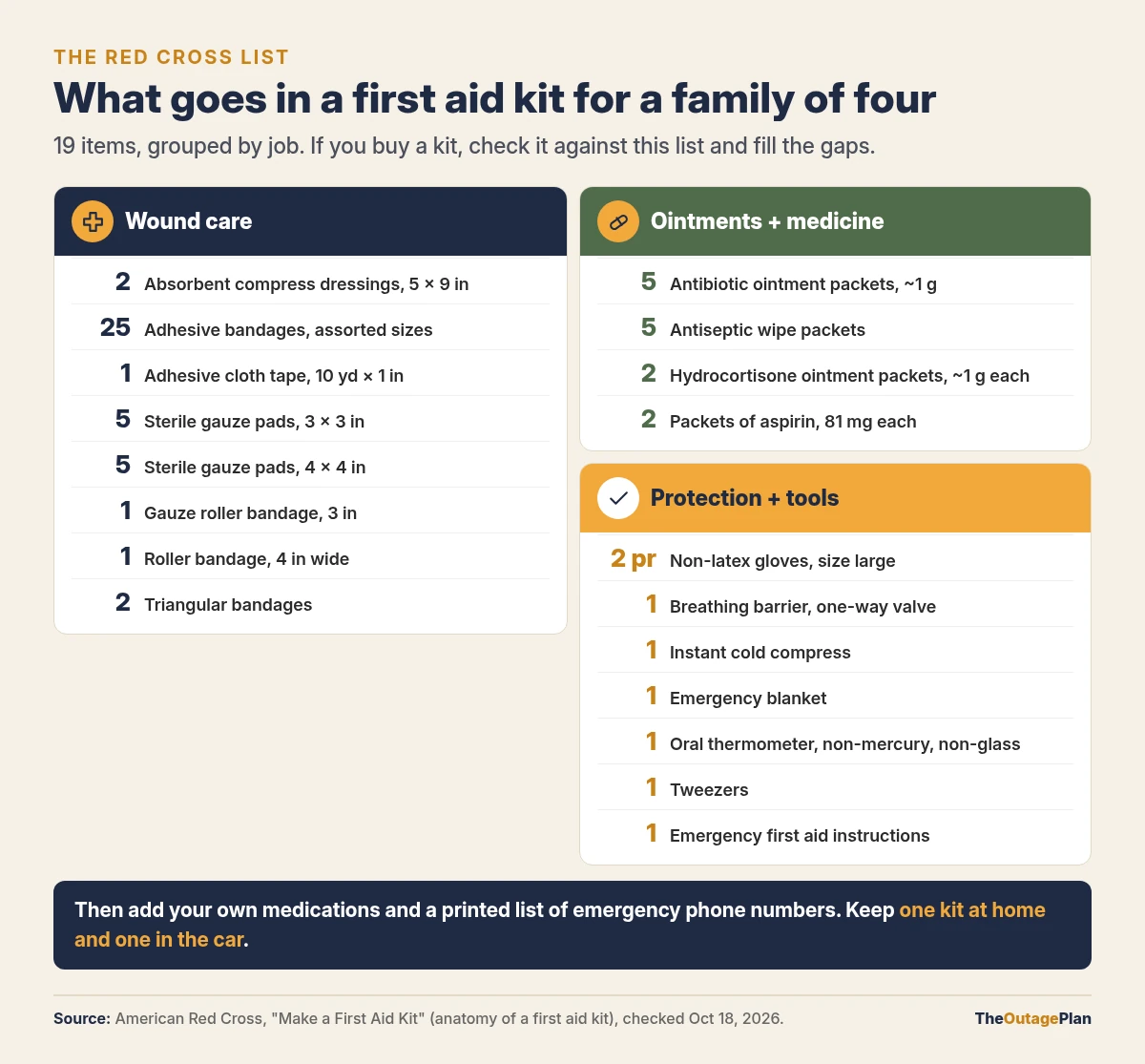
From the American Red Cross: Make a First Aid Kit, grouped by job:
What to add for a multi-day outage
In a long outage, roads freeze, stores close, and phones die, so a pharmacy or urgent care gets harder to reach. A stocked kit handles the small stuff so it doesn’t become big stuff. Add:

The Red Cross says to include personal medications and emergency phone numbers. For refrigerated medications, ask your provider how long each can be stored at higher temperatures; Ready.gov says to discard them after more than a day without power unless the label says otherwise (Ready.gov). Ready.gov lists a backup oxygen supply in its kit for people with disabilities (Ready.gov), and our oxygen concentrator outage guide covers cylinders, power stations, and fire safety.
Buy a kit or build one?
Either works. The Red Cross notes kits are sold at drugstores, and you can also assemble your own. If you buy one, compare its contents against the list above and fill in the gaps.
Our Gear page lists the first aid kit alongside the rest of our outage gear.
Keep it current
- ☐ Check expiration dates and replace used or expired items (Red Cross).
- ☐ Take a first aid and CPR class. The Red Cross offers them.
This is general preparedness information, not medical advice. We haven’t hands-on tested specific first aid kits yet. Sources checked Oct 18, 2026.