Heads up: Some links on this page are affiliate links. If you buy through them, we may earn a commission at no extra cost to you. As an Amazon Associate, we earn from qualifying purchases. Full disclosure
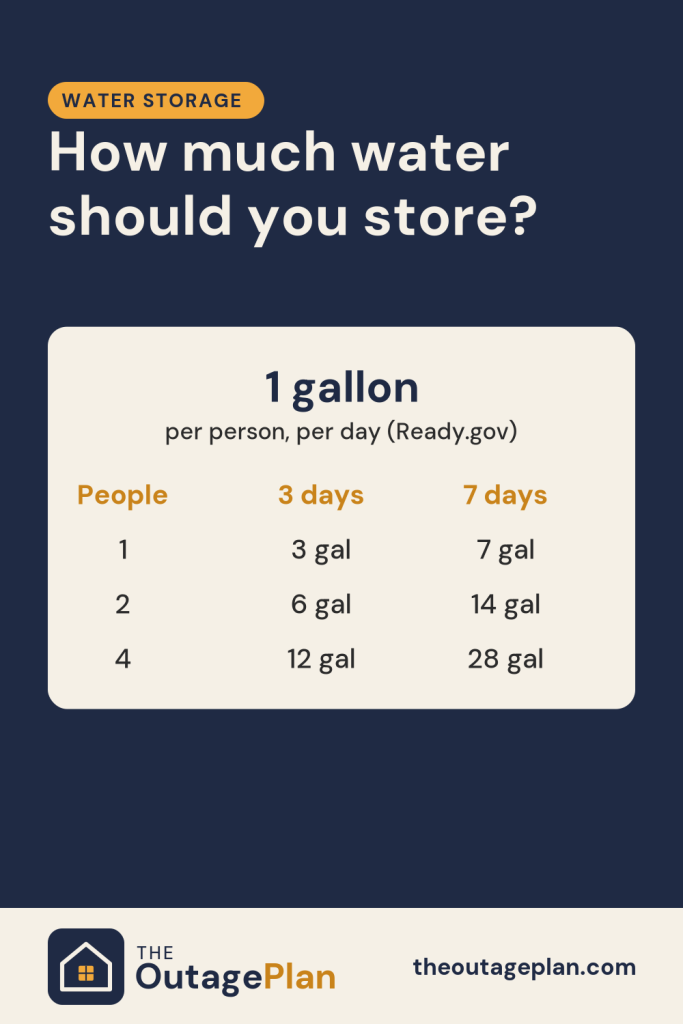
Bottom line: Store at least 1 gallon per person per day, for drinking and sanitation (Ready.gov). For a family of four, that’s 12 gallons for 3 days or 28 gallons for a week. In summer heat, plan on more: Ready.gov notes water needs can double in very hot temperatures.
Big storms can bring low water pressure or boil-water notices on top of a power outage, and homes on well pumps lose water when the power goes out (see whether a power station can run a well pump). Stored water is the cheapest, simplest piece of an outage plan.
The math

Based on 1 gallon per person per day (Ready.gov). About ¾ gallon of that is drinking fluids for a normally active person; the rest covers cooking and basic hygiene.
NOAA’s hurricane guidance says to keep at least a 3-day supply, and to store more than 3 days of water if you can (NOAA).
How to store it
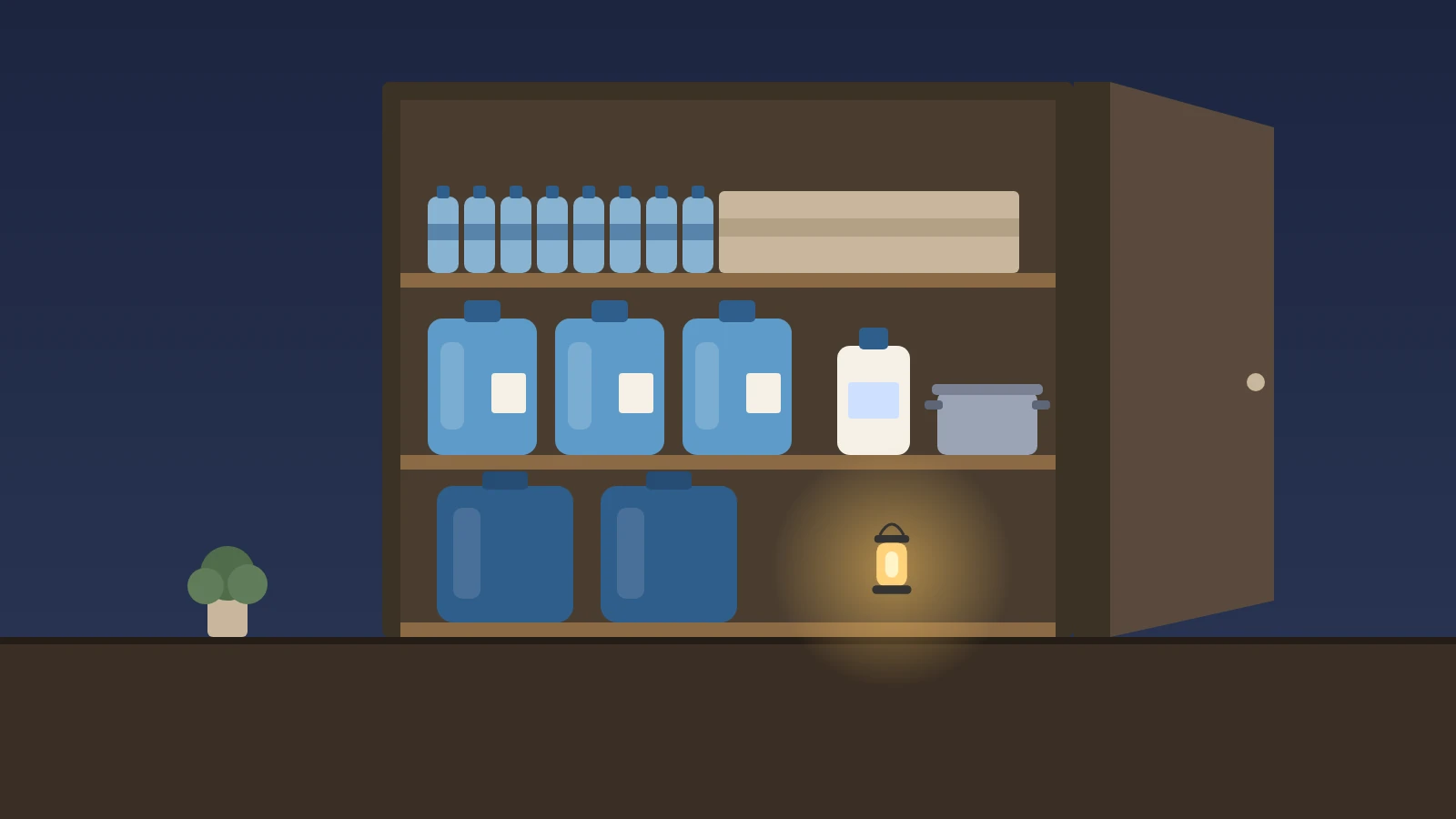
- Easiest: commercially bottled water, kept sealed in its original container in a cool, dark place (Ready.gov). Watch the date on the package.
- Filling your own: use food-grade water containers. Wash them with dish soap, then sanitize with 1 teaspoon of unscented liquid chlorine bleach per quart of water before filling with chlorinated tap water. Replace self-filled water every 6 months (Ready.gov).
- Mind the weight. Water weighs a little over 8 pounds per gallon, so a “7-gallon” jug weighs nearly 60 pounds full. Several smaller containers are easier to move than one huge one. Our water storage container picks compare sizes and full weights.
- Skip the hot garage. “Cool, dark place” is Ready.gov’s guidance, and a garage in August isn’t that in most of the country. A closet or under-stair space works better.
Water containers and bleach are on our Gear page, with what to look for.
If you run out: making water safe
Follow local authorities first. They’ll issue boil-water or do-not-drink advisories (CDC). If you have to treat water yourself:
Boil (best): bring clear water to a rolling boil for 1 minute, then let it cool (CDC). If the water is cloudy, let it settle or filter it through a clean cloth or coffee filter first.
Bleach (if you can’t boil): use regular, unscented chlorine bleach, not color-safe or scented. From the EPA’s emergency disinfection table:
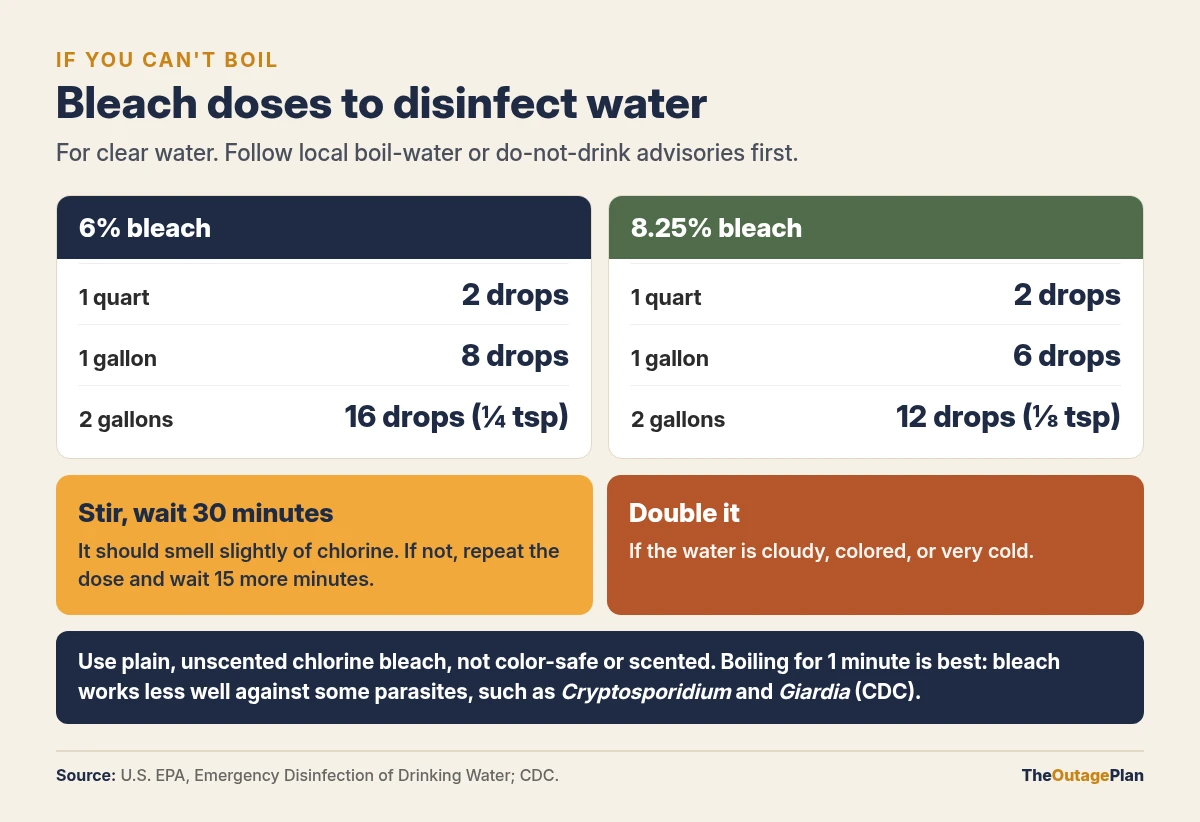
Stir, then wait 30 minutes. Double the dose if the water is cloudy, colored, or very cold (EPA). The CDC adds that bleach doesn’t work as well as boiling against some parasites, such as Cryptosporidium and Giardia (CDC).
Quick checklist
- ☐ Gallons stored = people × days (at least 3 days; a week is better)
- ☐ Extra for pets and hot weather
- ☐ Dates written on self-filled containers, rotated every 6 months
- ☐ A bottle of plain unscented bleach (check its date) and a dropper
- ☐ A pot and a way to boil without grid power (outdoors only for camp stoves; see Ready.gov)
We haven’t hands-on tested any water containers or filters yet; product links will say so when we add them. Sources checked Oct 18, 2026.
Save this for later