72-Hour Outage Kit

We may earn a commission from links on this page, at no cost to you. As an Amazon Associate, we earn from qualifying purchases. Disclosure
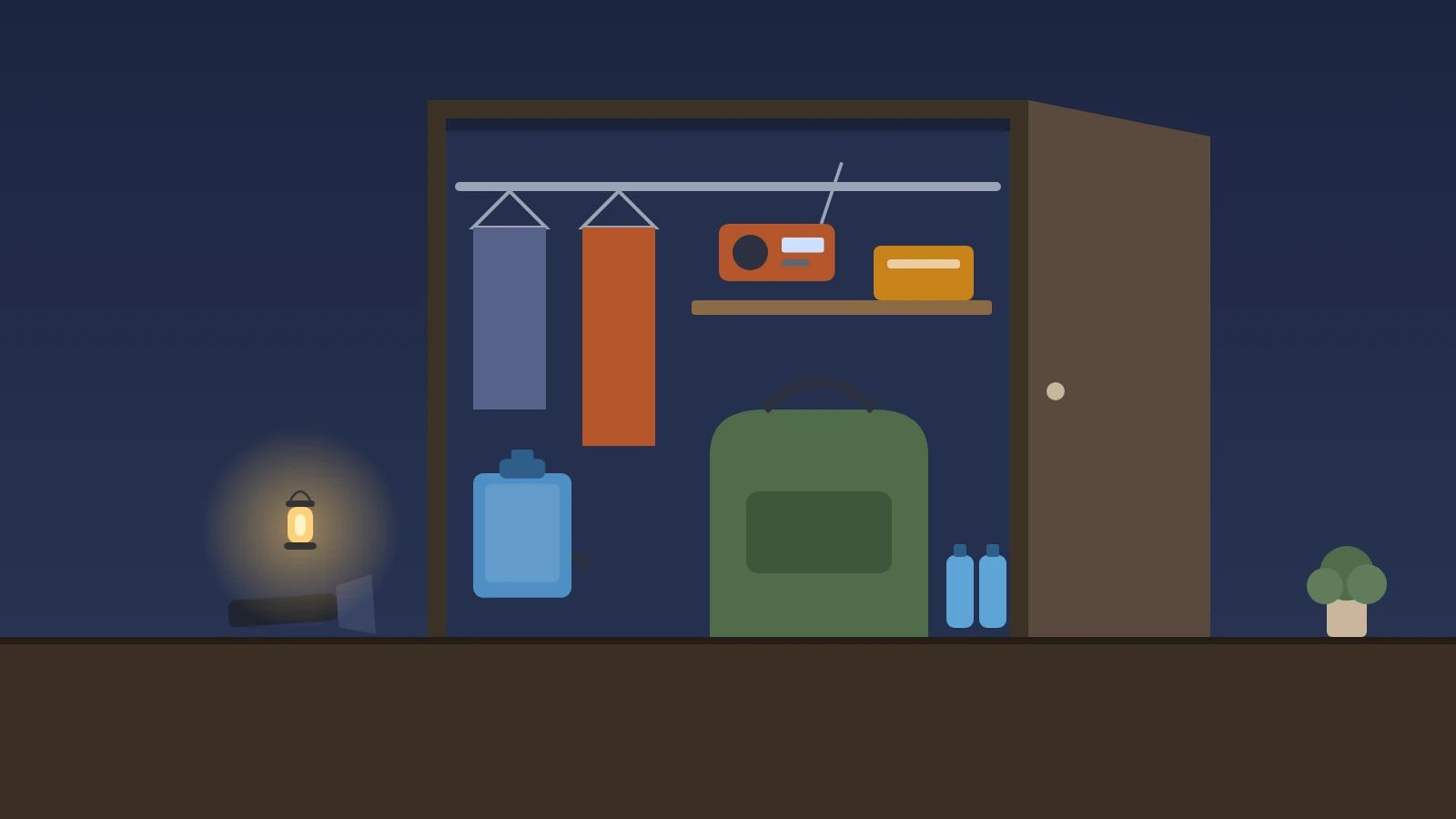
Illustration: an open hall closet with a packed backpack, a water container, an emergency radio, coats, and a flashlight and lantern on the floor

Goal: get your household through 3 days at home without power or stores. Built on Ready.gov’s Build a Kit list.

Big outages can outlast a 3-day kit. One example:
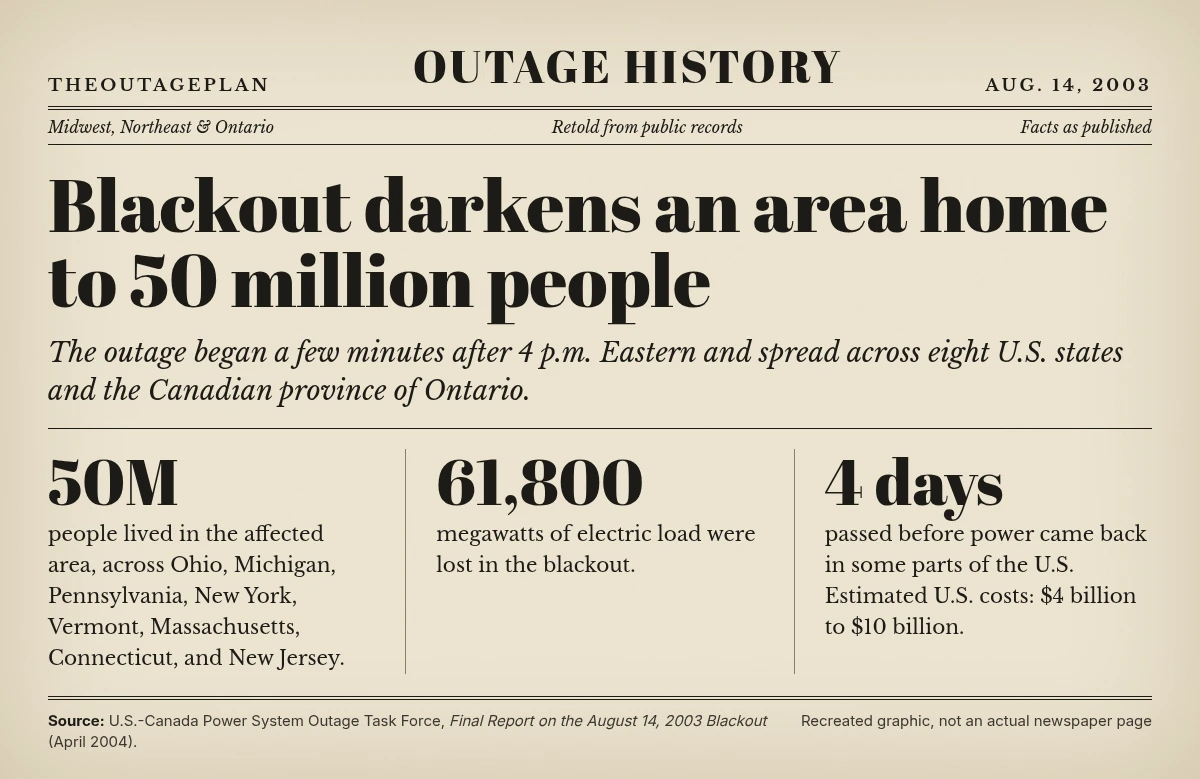
Newspaper-style graphic: August 14, 2003 blackout darkens an area home to 50 million people
Recreated newsprint-style graphic, not an actual newspaper page. Source: U.S.-Canada Power System Outage Task Force final report (April 2004).

Checklist (per household)

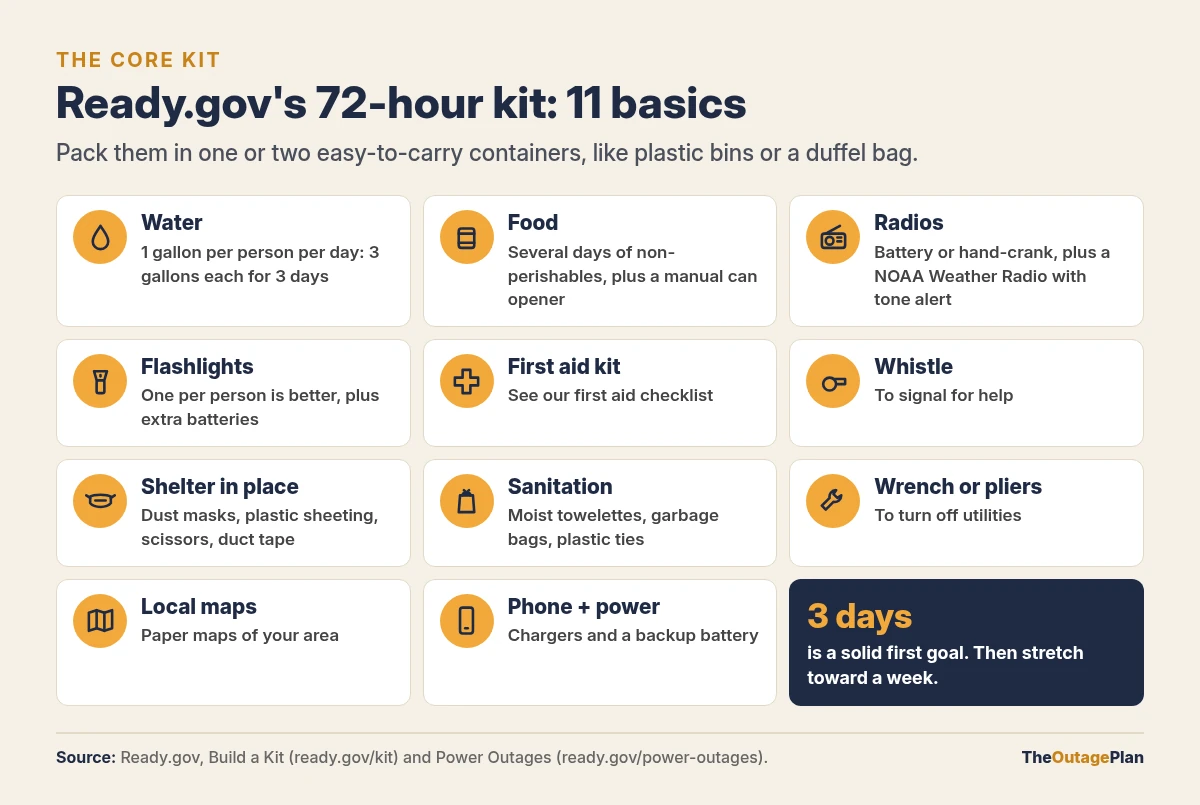
Ready.gov's 11 basic kit items: water at 1 gallon per person per day, several days of non-perishable food and a manual can opener, a battery or hand-crank radio plus a NOAA Weather Radio with tone alert, flashlights and extra batteries, a first aid kit, a whistle, dust masks with plastic sheeting, scissors and duct tape, moist towelettes with garbage bags and plastic ties, a wrench or pliers, local maps, and a phone with chargers and a backup battery; 3 days is a first goal, then a week
Sources: Ready.gov, Build a Kit and Ready.gov, Power Outages.

Also add: prescription medications, CO detectors with battery backup on every level (Ready.gov), cash in small bills (NOAA), and pet food, water, and medications. The flashlight-per-person tip is from Ready.gov.

Our picks: a first aid kit (our pick; what to add for outages) and a phone backup battery (our pick).

Seasonal add-ons: winter layers and blankets for a freeze; fans and extra water for hurricane season and heat waves; N95 masks for wildfire smoke (Ready.gov).

Full explainer: The 72-Hour Outage Kit checklist →

Checklist sourced from Ready.gov and NOAA; no hands-on product testing yet.