
Heads up: Some links on this page are affiliate links. If you buy through them, we may earn a commission at no extra cost to you. As an Amazon Associate, we earn from qualifying purchases. Full disclosure
Bottom line: A 72-hour kit covers water, food, light, information, first aid, and power for 3 days, so you can stay home safely while crews work. Start with Ready.gov’s basic list, then add the seasonal items below for the outages your area gets.
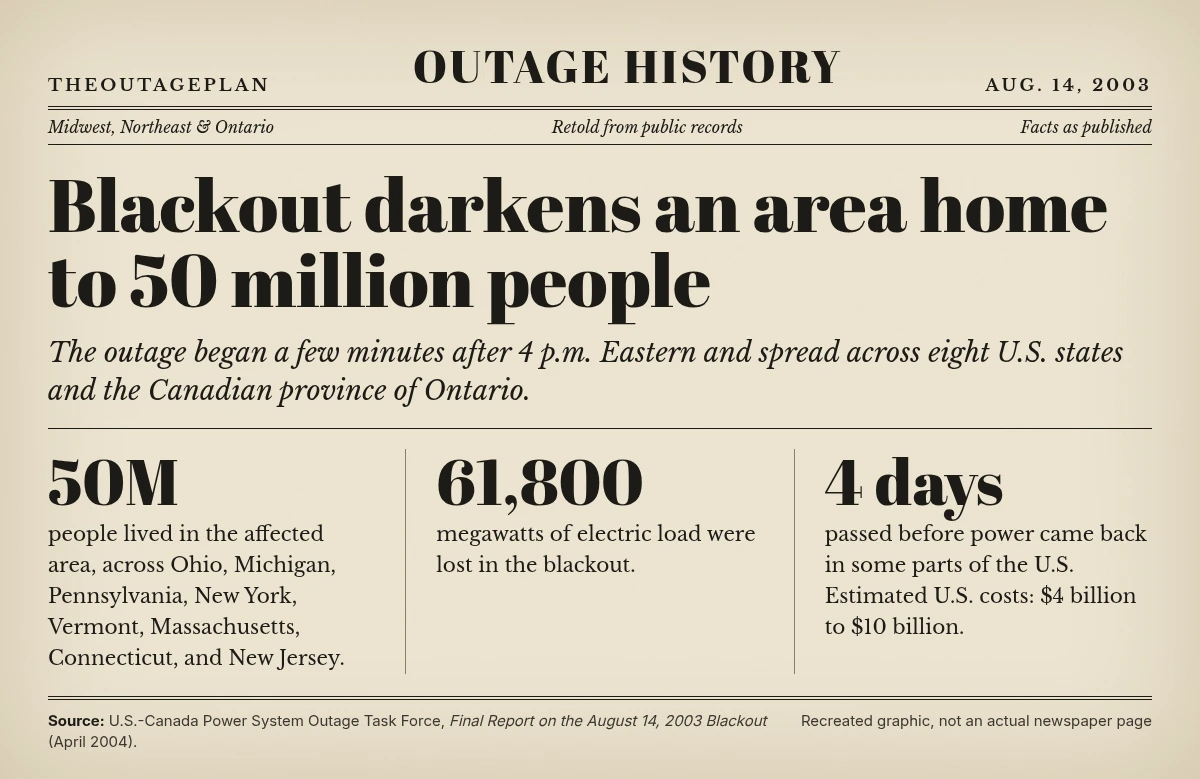
Ready.gov says you may need to get by on your own for several days after an emergency (Ready.gov). Big outages can run past three days. One example:
The core kit (from Ready.gov)
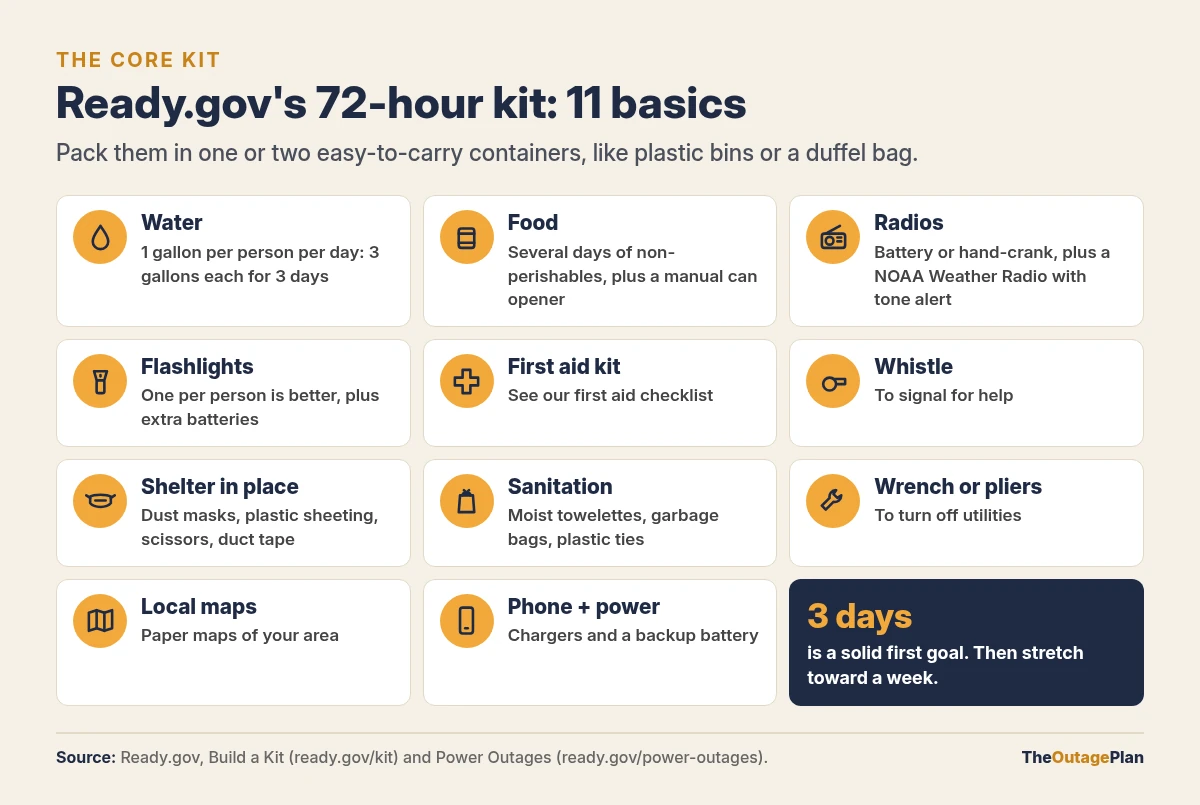
All 11 come from Ready.gov’s Build a Kit list; the flashlight-per-person tip is from Ready.gov’s power outage page. Our guides go deeper on three of them: emergency light bulbs for stairs and hallways, the first aid checklist, and how many phone charges to plan for, plus which power bank to buy.
Seasonal add-ons
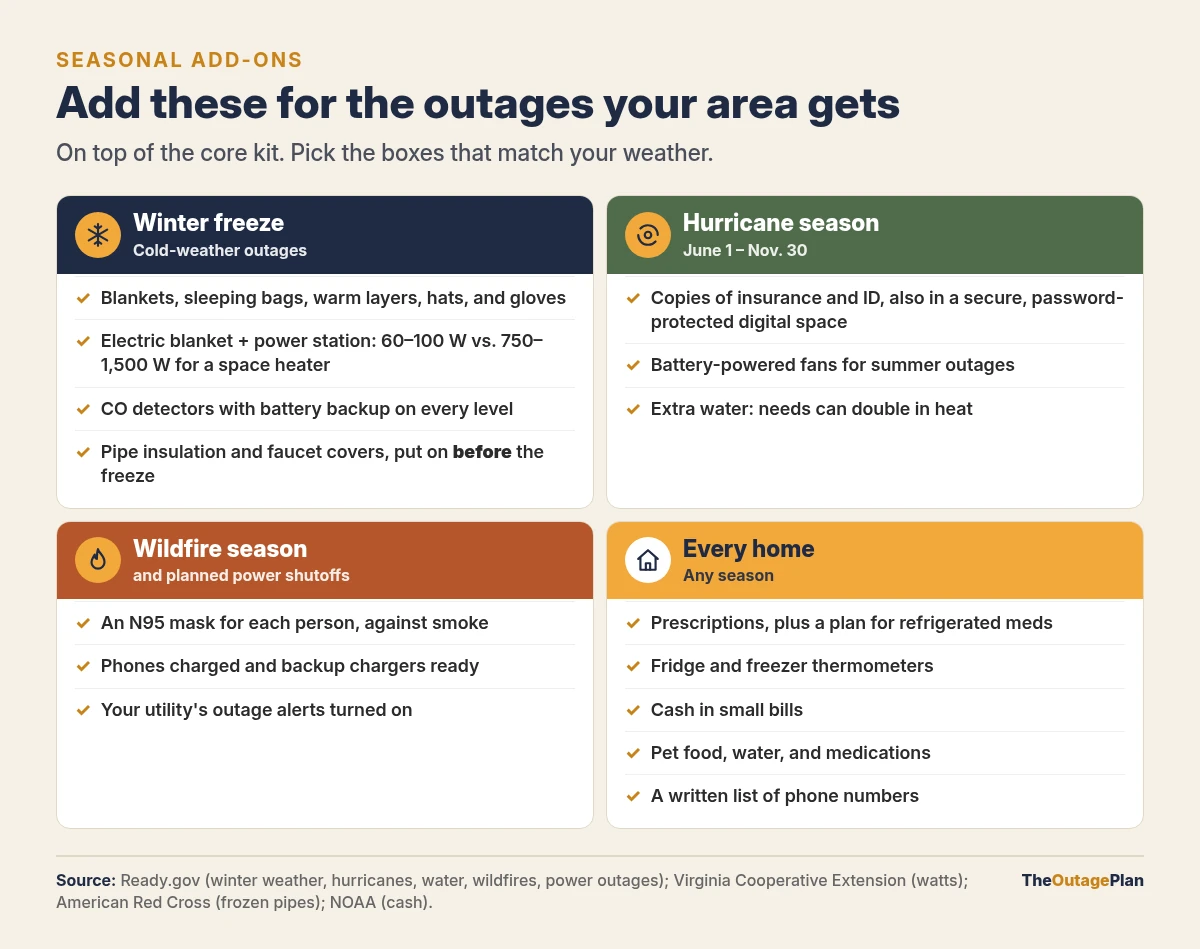
Sources: Ready.gov on winter weather, hurricanes, water, wildfires, and power outages; Virginia Cooperative Extension for the blanket and heater watts; the Red Cross on frozen pipes; and NOAA on cash. Planned shutoffs are real: in California, for example, utilities may cut power on purpose during dangerous fire weather (CPUC). Our wildfire power shutoff guide covers notice, how long shutoffs last, and backup power, and our food safety guide covers the thermometers.
Optional: backup power
A portable power station can keep a fridge, CPAP, phones, and lights going for part of an outage. Size it before you buy: see our power station sizing guide.
Keep it working
- ☐ Store the kit in one or two easy-to-carry containers (Ready.gov suggests plastic bins or a duffel bag)
- ☐ Check it twice a year. Before hurricane season (May) and before winter (November) is a good rhythm.
- ☐ Rotate water every 6 months if self-filled (Ready.gov). Need containers? See our water storage container picks
The named gear from this kit is collected on our Gear page.
Printable version: Download the free one-page checklist (PDF)
This checklist is built from government sources; we haven’t hands-on tested specific kit products yet. Sources checked Oct 18, 2026.